


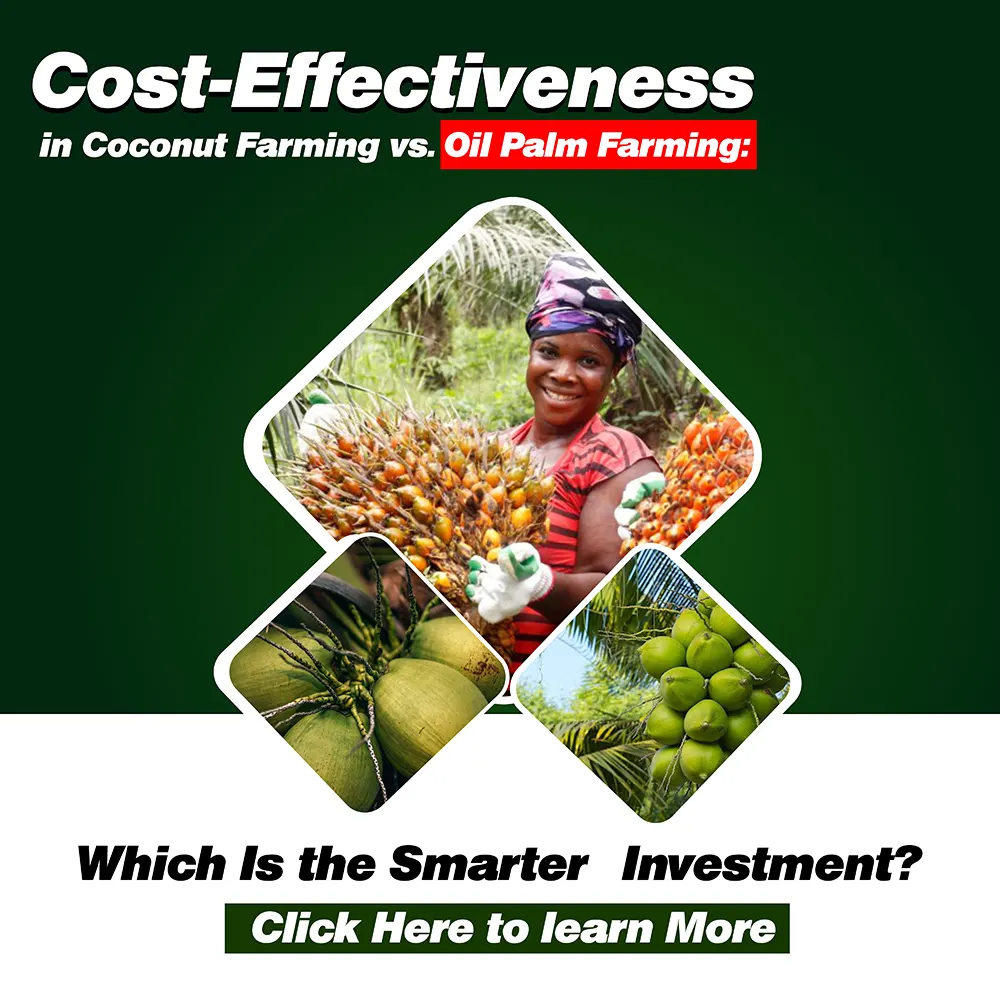



Investing in agro real estate is not just about owning land—it’s about understanding how effectively that land turns money, time, and management into long-term value. Both coconut and oil palm farming have become major players in Africa’s agricultural landscape, attracting investors seeking stability, passive income, and asset growth.
However, the real question remains: Which is more cost-effective to invest in—the coconut tree or the oil palm?
Let’s break it down in practical terms that matter to real investors.
Understanding Cost-Effectiveness in Agro Real Estate
Cost-effectiveness in agro real estate simply means how efficiently your capital, labor, and time translate into profit and long-term land value. It considers:
-
Startup capital (land, seedlings, tools, and irrigation)
-
Operating costs (labour, maintenance, fertilizer, and pest control)
-
Time to maturity and first harvest
-
Yield per hectare
-
Market prices and processing opportunities
-
Long-term lifespan and replanting needs
-
Climate resilience and sustainability
These factors determine whether an investor earns a consistent profit or gets stuck waiting years for returns.
Initial Investment: Entry Cost and Setup
When it comes to setup, both crops require different levels of capital and preparation.
Land and Site Preparation
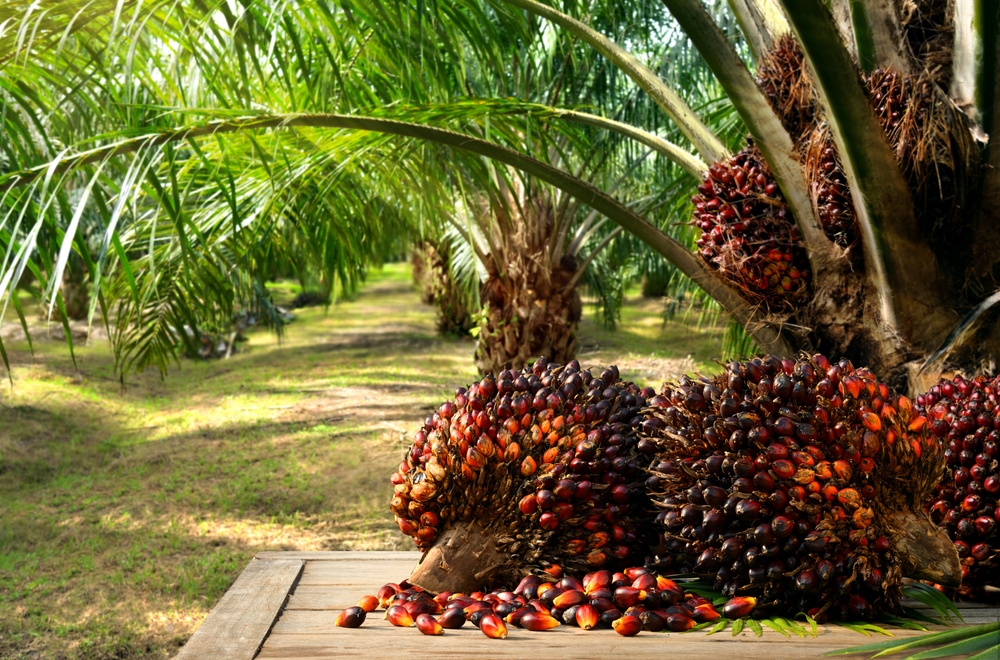
Oil palm thrives in fertile, humid regions with good rainfall. The land preparation process involves clearing, lining, nursery setup, and soil testing—all of which require more upfront costs.
Coconut, on the other hand, grows well in sandy and coastal soils. Its land preparation process is simpler, often needing minimal fertilizer during the early stages. This makes coconut farming relatively cheaper to start.
Seedlings and Planting
Improved oil palm seedlings from hybrid varieties cost more but guarantee faster and higher yield. Coconut seedlings are cheaper, and spacing requirements mean fewer trees per hectare, further lowering startup costs.
Verdict: Coconut farming offers a lower-cost entry point, while oil palm demands higher capital but begins producing sooner.
Time to Yield and Revenue Flow
Oil palm generally starts producing fruit within 3 to 4 years, with peak production between years 7 to 12. Coconut farming takes longer—around 5 to 6 years before consistent harvest—but can continue producing for over 60 years.
This means oil palm generates earlier cash flow, while coconut wins in longevity.
Verdict: Oil palm is better for mid-term returns; coconut is ideal for long-term stability.
Operational and Maintenance Costs
Labour
Oil palm requires frequent harvesting—sometimes every two weeks—making it labour-intensive. Coconut harvesting happens every 45–60 days, requiring less manpower and lower wage costs over time.
Fertilizer and Pest Management
Oil palm needs a structured fertilizer schedule and regular pest management to maintain yield. Coconut trees are more resilient and require less intensive care once established.
Verdict: Coconut farming has lower operating costs per hectare, making it more cost-efficient for investors seeking passive returns.
Yield and Revenue Potential
Oil Palm
Oil palm is a global leader in oil yield per hectare, producing up to 4–5 tons of crude oil annually. Its large-scale production suits investors targeting industrial buyers.
Coconut
Though its oil yield per hectare is lower, coconut provides multiple income streams—oil, water, coir, charcoal, and desiccated coconut. The market for organic and natural products gives coconut-based goods a strong premium globally.
Verdict: Oil palm dominates in sheer volume, but coconut offers diversified income channels that balance out total revenue.
Processing and Value Addition
This is where investors separate average farms from profitable ones.
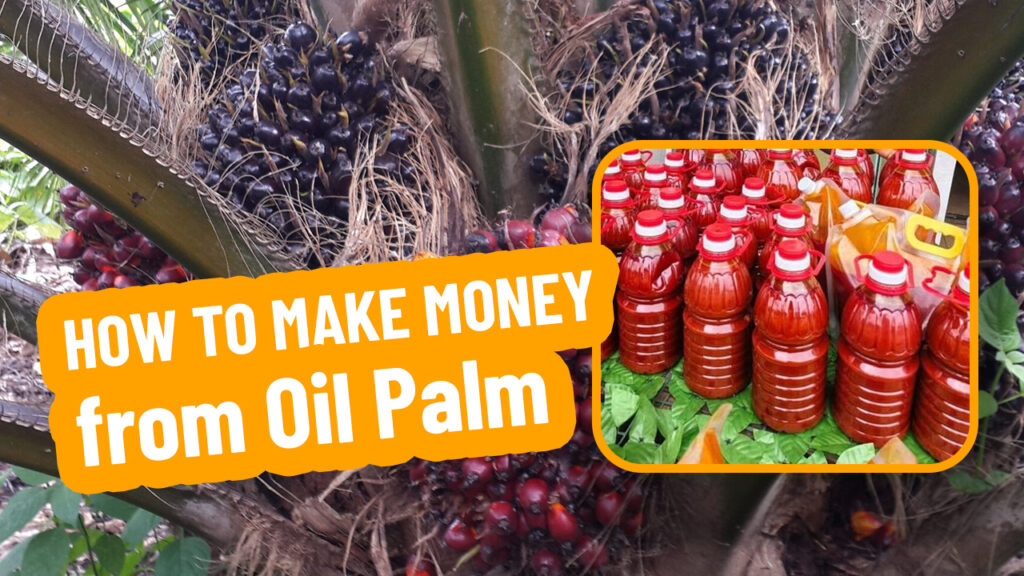
Oil palm processing (milling, kernel extraction, and refining) can be capital-heavy but delivers consistent returns from bulk buyers. Coconut processing, on the other hand, can be done at smaller scales—producing virgin coconut oil, coconut water, and related products with strong export demand.
Silvawell Limited often integrates processing facilities into its projects, helping investors multiply raw yields into finished goods for local and international markets.
Verdict: Both crops become significantly more profitable with value addition, but coconut offers more flexible processing options for medium-scale investors.
Lifecycle and Reinvestment
An oil palm plantation has a productive lifespan of about 25–30 years, after which replanting is necessary—a major cost investors must plan for.
Coconut plantations can remain productive for over 60 years, with minimal replanting requirements. This makes coconut the more enduring investment asset, particularly for intergenerational wealth planning.
Verdict: Coconut offers better long-term cost-effectiveness, while oil palm cycles faster but requires future reinvestment.
Market Trends and Climate Resilience
Oil palm faces periodic price swings influenced by global industrial demand. Coconut markets, though smaller, have remained stable due to increasing health-conscious consumption trends.
Coconut trees also tolerate coastal climates and saline soils better, giving them an advantage in regions affected by changing weather patterns.
Verdict: Coconut is more climate-resilient and offers stable demand; oil palm performs best with consistent rainfall and large-scale processing access.
Combining Both Crops: The Balanced Strategy
The smartest investors often blend both crops within their portfolio. Oil palm generates quicker returns, while coconut provides longevity and diversification. Together, they balance cash flow and sustainability—two essential pillars for agro real estate success.
Investing through a company like Silvawell Limited allows this strategy to be managed professionally. Their model includes land acquisition, plantation setup, technical supervision, and processing integration—reducing investor risk while optimizing cost-efficiency.
A Profitable Future Rooted in Nature
When you weigh both sides, the choice depends on your investment horizon.
If you want faster revenue and larger volume, oil palm is ideal.
If you prefer lower long-term costs, stability, and diversified profit streams, coconut farming is the smarter choice.
Either way, both remain two of Nigeria’s strongest agro real estate opportunities—especially when managed under an expert system that ensures efficiency, transparency, and scalability.
Silvawell Limited continues to provide investors with structured, secure, and sustainable pathways to own productive farmland and enjoy consistent returns.
Your next step could be the beginning of lasting wealth.
Invest in coconut or oil palm farming with Silvawell Limited today—and grow prosperity that stands the test of time.


