


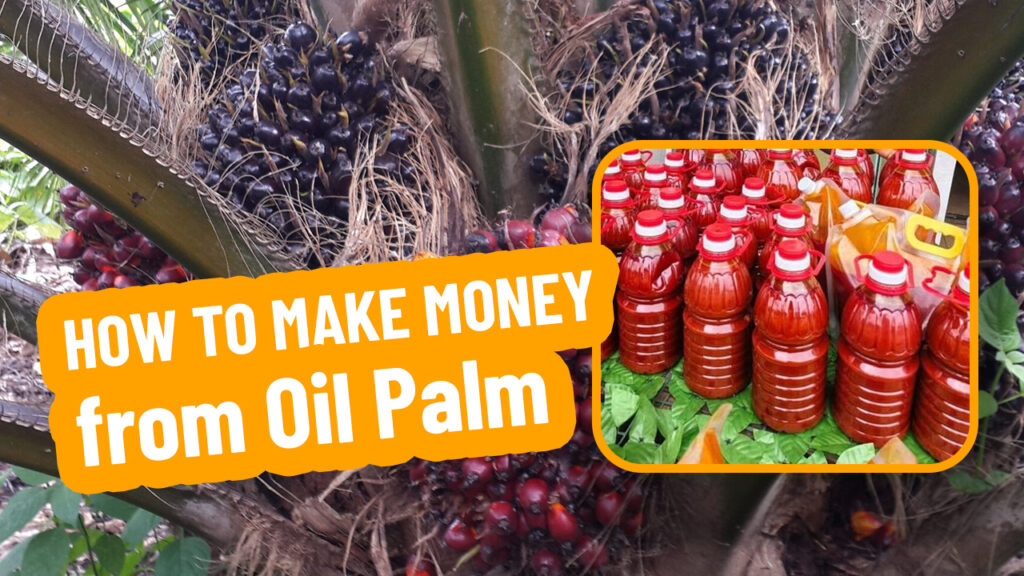



Palm oil is woven into the fabric of Nigerian economic life. It is in the food we cook, the soap we use, the cosmetics on our shelves, and the industrial products that fuel the economy. Nigeria is one of the world’s major palm oil producers, and yet — despite the scale of this industry — most Nigerians have never seriously considered how they personally could make money from it.
The answer is: in more ways than most people realise.
This article breaks down every significant income stream available from the palm oil value chain in Nigeria — from owning a managed estate in Edo State to selling plantain intercrop, fresh fruit bunches, palm kernel oil, and beyond. Whether you are an investor looking for a managed, hands-off entry into the industry or an entrepreneur exploring active income opportunities, the palm oil sector has an income model that matches your profile.
The Palm Oil Value Chain: Where Money Is Made
Before exploring individual income streams, it helps to understand where value is created in the palm oil industry. The chain runs from soil to shelf:
- Land preparation and cultivation — planting and growing oil palm trees
- Harvesting — cutting mature fresh fruit bunches from the trees
- Primary processing — pressing FFBs to extract crude palm oil (CPO) and palm kernels
- Secondary processing — refining CPO into edible palm oil, and cracking palm kernels to extract palm kernel oil (PKO)
- Distribution and trading — moving oil products from mills to distributors, manufacturers, and retailers
- End use — food manufacturing, cosmetics, biofuels, industrial applications
Money can be made at every stage of this chain. The stage you enter depends on your available capital, your time, your expertise, and the level of risk you are comfortable with. The most accessible entry point for most investors — particularly those without farming experience or the ability to manage a farm directly — is at the cultivation and estate ownership stage, which is exactly what SilvaWell’s managed investment model enables.
Income Stream Overview
| Income Stream | When It Starts | Who Benefits | Risk Level |
|---|---|---|---|
| Plantain intercrop sales | Year 1 | Managed estate investors | Low — stable domestic demand |
| Fresh fruit bunch (FFB) sales | Year 3+ | Farm owners / investors | Medium — market price variation |
| Palm kernel oil (PKO) sales | Year 6+ | Farm owners / processors | Medium — depends on processing access |
| Crude palm oil (CPO) trading | Immediate | Traders / processors | Medium-High — requires capital & market knowledge |
| Palm kernel shells (biomass) | Year 6+ | Processors / by-product sellers | Low — growing industrial demand |
| Agro-consulting / training | Expertise-dependent | Experienced practitioners | Low — knowledge-based income |
Let us now examine each income stream in detail.
Income Stream 1: Plantain Intercrop Sales
What it is
Plantain intercropping is the practice of growing plantain plants between young oil palm rows during the early years of farm establishment — typically years 1 through 4. As the oil palm canopy grows and closes, the plantain plants are gradually removed. During this window, they produce commercial quantities of plantain for sale.
Why it matters for investors
For investors in a managed oil palm estate, plantain intercrop income is the earliest cash return available. Rather than waiting until year 3 for the first oil palm FFB harvest, investors begin earning from the land in year 1. This income does not fully offset the investment cost — it is not designed to — but it meaningfully reduces the effective cost of the pre-production period and provides a tangible early signal that the estate is productive.
Market dynamics
Plantain is one of Nigeria’s most consistently demanded staple crops. It is consumed across every region of the country — roasted, fried, boiled, or processed into plantain flour and chips. Demand is driven by population growth and is not subject to significant seasonal collapse. Prices vary by season and location, but the structural demand for plantain in Nigeria is as reliable as any agricultural market in the country.
In Edo State specifically, plantain is widely cultivated and consumed, and proximity to Benin City — a major urban market — provides a readily accessible buyer base for farm produce.
Who benefits
Investors in SilvaWell’s managed estate packages automatically benefit from plantain intercrop income. The intercrop is established as part of the standard farm management programme — it is not an optional extra. SilvaWell manages the planting, maintenance, and sale of the plantain crop on behalf of investors.
Income Stream 2: Fresh Fruit Bunch (FFB) Sales
What it is
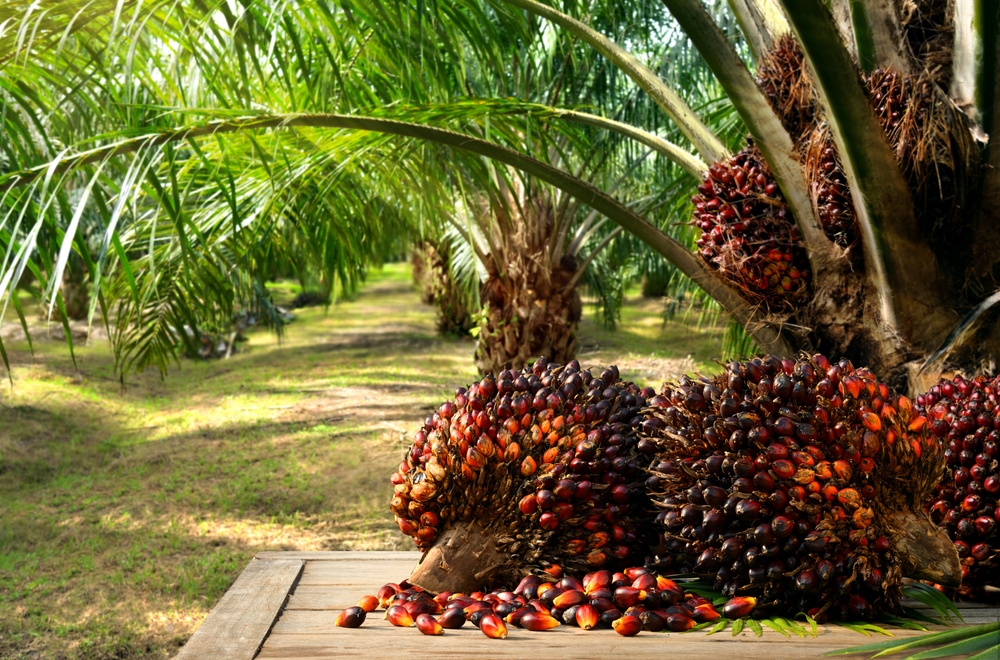
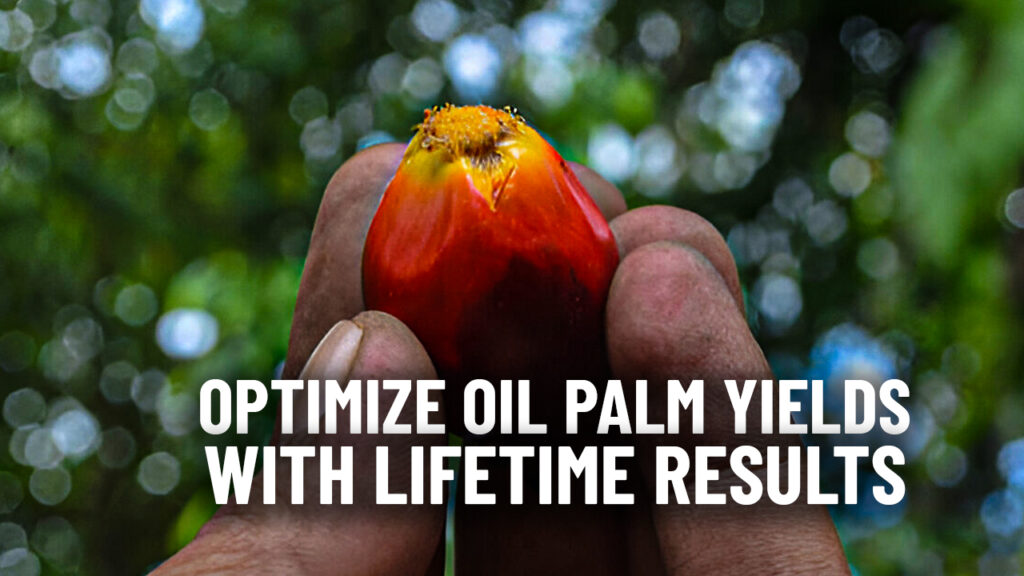
Fresh fruit bunches are the primary agricultural product of a mature oil palm estate. Each FFB is a large cluster of small oil-bearing fruits attached to a central stalk. When cut from the tree at peak ripeness, the FFBs are transported to a palm oil processing mill where they are sterilised, threshed, and pressed to extract crude palm oil (CPO).
The sale of FFBs to processing mills is the primary recurring income stream for oil palm estate owners and investors. It is the engine of oil palm investment returns.
Production timeline
Tenera hybrid oil palm trees — the variety used by SilvaWell and favoured by commercial farmers across the Edo State palm belt — begin producing fruit bunches from approximately year 3. Initial yields are modest, then increase substantially as the trees mature:
- Year 3: First FFB harvest — modest yield, income begins
- Year 4 to 5: Yield increases as trees strengthen and trunk circumference grows
- Year 6 to 7: Full production capacity reached — peak FFB yield per tree
- Year 8 to 25+: Sustained peak production, with gradual tapering toward the end of the commercial lifespan
What determines FFB income?
- Number of productive trees — directly linked to your plot size (more acres = more trees = more FFBs)
- FFB yield per tree — determined by tree variety, soil quality, management practices, and rainfall; Tenera hybrids consistently outperform Dura varieties
- Current FFB mill gate price — set by processors and influenced by the prevailing crude palm oil price in Nigeria and globally
- Oil extraction rate (OER) — Tenera trees produce FFBs with an OER of 20 to 22%, compared to 10 to 15% for Dura varieties. This higher extraction rate commands a premium at the mill
Why FFB income is inflation-resilient
Crude palm oil prices in Nigeria are set in naira but influenced by global palm oil market dynamics. As the naira has weakened against the dollar over the past decade, naira-denominated palm oil prices have risen correspondingly. This means that FFB income in naira terms has, historically, kept pace with or exceeded naira inflation — a critical advantage for investors holding naira-denominated agricultural assets.
Income Stream 3: Palm Kernel Oil (PKO) and Palm Kernel Sales
What it is
Within each oil palm fruit is a hard nut — the palm kernel. When the outer fleshy mesocarp is pressed for crude palm oil, the kernels are separated and become a distinct commodity. Palm kernels are then cracked to extract palm kernel oil (PKO), a different product from crude palm oil with separate industrial applications and pricing.
Palm kernel oil is widely used in the cosmetics and personal care industry — in soaps, shampoos, and skin products — as well as in food processing and industrial applications. It trades on both domestic Nigerian and international markets.
Palm kernel shells — the overlooked by-product
After the kernel is cracked, the remaining hard outer shell — the palm kernel shell (PKS) — is a valuable by-product in its own right. PKS is increasingly used as a biomass fuel by industrial facilities, power plants, and boiler operators looking for affordable, high-energy fuel alternatives. In Nigeria, as energy costs rise and businesses seek alternatives to diesel generators, the market for PKS biomass fuel is growing steadily.
For estate owners with access to processing infrastructure, PKS represents an additional income layer with relatively low extraction cost since it is a by-product of the kernel cracking process.
Who benefits from kernel income?
In a managed estate arrangement, the handling of palm kernels and the distribution of kernel income is determined by the farm management company’s processing and sales arrangements. SilvaWell investors should discuss the specific kernel income structure with the SilvaWell team, as it depends on the mill processing agreements in place for each estate.
Income Stream 4: Crude Palm Oil Trading
What it is
Beyond estate ownership, a more active income opportunity in the palm oil sector is commodity trading — buying crude palm oil at the mill gate or from small farmers and selling it at a premium to processors, distributors, or manufacturers.
Who this suits
CPO trading is not a passive income model. It requires market knowledge, working capital, logistics capacity, and the ability to manage the price risk between purchase and sale. It is best suited to entrepreneurs with existing relationships in the agri-commodity supply chain, access to transportation, and an understanding of palm oil market pricing dynamics.
For investors seeking passive income, CPO trading is not the recommended entry point. For business-minded individuals with agricultural market experience in Lagos, Abuja, or across the south-south and southeast regions, it can be a high-margin business.
What to know before trading palm oil
- CPO is graded by free fatty acid (FFA) content — lower FFA commands premium pricing from processors
- Storage time matters — CPO deteriorates in quality over time if improperly stored, affecting the price you can achieve
- Regulatory requirements apply — commercial CPO trading requires appropriate business registration and compliance with NAFDAC and state government guidelines
- Margins are strongest for those who buy directly from mills or smallholder farmers and sell to industrial buyers, cutting out intermediaries
Income Stream 5: Agro-Consulting and Knowledge-Based Income
What it is
As the oil palm sector in Nigeria expands and the government promotes agricultural investment as a development strategy, there is a growing market for knowledgeable consultants who can guide smallholder farmers, new investors, and agricultural cooperatives through the process of establishing and managing oil palm estates.
Who this suits
This income stream is best suited to agronomists, extension workers, experienced farm managers, and individuals who have worked in the oil palm sector and have accumulated practical knowledge. It is not a starting point for new investors, but it is a viable long-term income stream for those who develop expertise through engagement with the industry over time.
Consulting services that are in demand in the Nigerian oil palm sector include: seedling sourcing guidance (particularly navigating the NIFOR supply chain), farm establishment planning, agronomy advisory services, investor advisory on estate acquisition, and grant and subsidy application support.
The Managed Estate Model: The Simplest Path to Palm Oil Income
For the majority of Nigerians — salaried workers in Lagos, business owners in Abuja, diaspora investors abroad, or anyone without prior agricultural experience — the most practical way to make money from palm oil is through a professionally managed oil palm estate investment.
This model combines income streams 1 (plantain intercrop), 2 (FFB sales), and 3 (palm kernel income) into a single, managed investment package that requires no farming expertise, no physical presence on the farm, and no operational management from the investor. The management company — in this case, SilvaWell Limited in Benin City, Edo State — handles every stage of farm operations from land preparation through to harvest and sale.
The investor provides the capital. The farm generates the income. The management company executes the operations.
Why Edo State is the right location
Edo State sits within Nigeria’s traditional palm oil belt — the same ecological zone that produced Nigeria’s historic palm oil wealth in the pre-petroleum era, and where commercial operations like Presco PLC have built multi-billion naira businesses on exactly this crop. The combination of favourable rainfall patterns, established processing infrastructure, proximity to major markets, and NIFOR’s presence in Benin City makes Edo State one of the most viable locations in Nigeria for commercial oil palm cultivation.
SilvaWell’s estates are specifically sited in Edo State to take advantage of this ecosystem — the soil, the climate, the infrastructure, and the expertise that comes from operating in the heartland of Nigerian palm oil country.
Choosing Your Palm Oil Income Path
The right way to make money from palm oil in Nigeria depends entirely on your resources, your goals, and your capacity. Here is a simple framework:
- If you have capital but limited time and expertise — managed estate investment with SilvaWell is your best entry. You own productive land, earn from three income streams, and SilvaWell manages everything.
- If you have capital, time, and an entrepreneurial appetite — consider combining a managed estate with active CPO or palm kernel trading as a complementary business.
- If you have expertise but limited capital — knowledge-based consulting and advisory work can generate income while you build the capital base to invest in your own estate.
- If you are starting from scratch with no capital, expertise, or time — begin with education, start saving with the specific goal of an oil palm estate, and use resources like this article and the SilvaWell team to build your knowledge base before you invest.
The Nigerian palm oil industry is large enough, established enough, and growing fast enough that there is a genuine income opportunity at every level of entry. The key is entering at the right level for your current situation — and having a credible, transparent partner in whichever path you choose.


